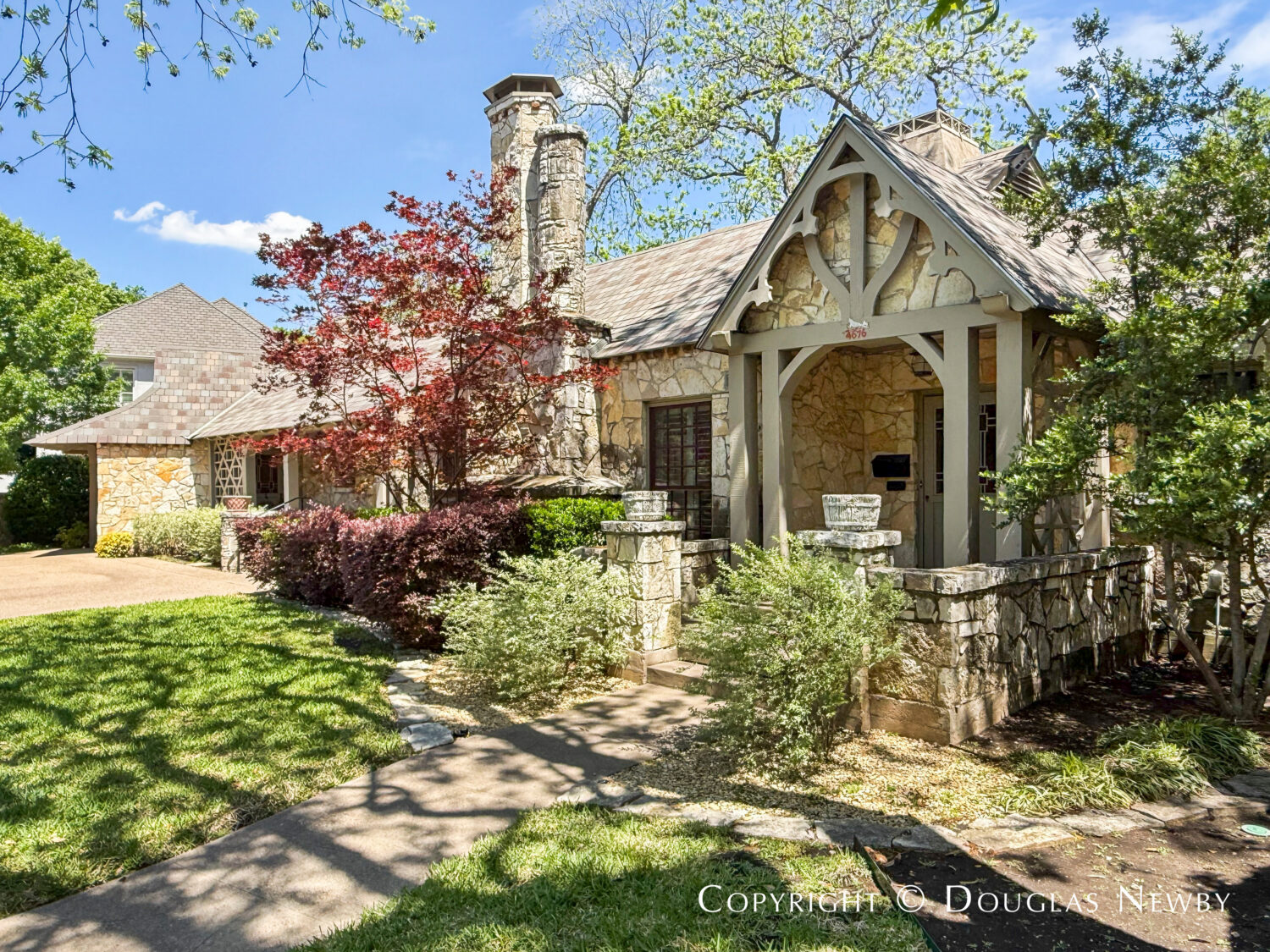
This Charles Dilbeck designed home in Highland Park demonstrates the level of interest buyers have in an architecturally significant historic home. Nancy McCoy, FAIA, President of the Charles Stevens Dilbeck Architecture Conservancy, said the interior of this Dilbeck is one of the most intact she has seen.
It is a victory whenever a historically and architecturally significant home is sold to a new owner who will restore and renovate it. Every historic home that has not been extensively renovated or expanded is in danger of being torn down. This danger is especially acute when an architecturally significant home by a famous architect like Charles Dilbeck is only 1,800 square feet and is on a substantial lot in Highland Park.
This Dilbeck prevailed over a builder’s overtures for a lot sale and demolition.
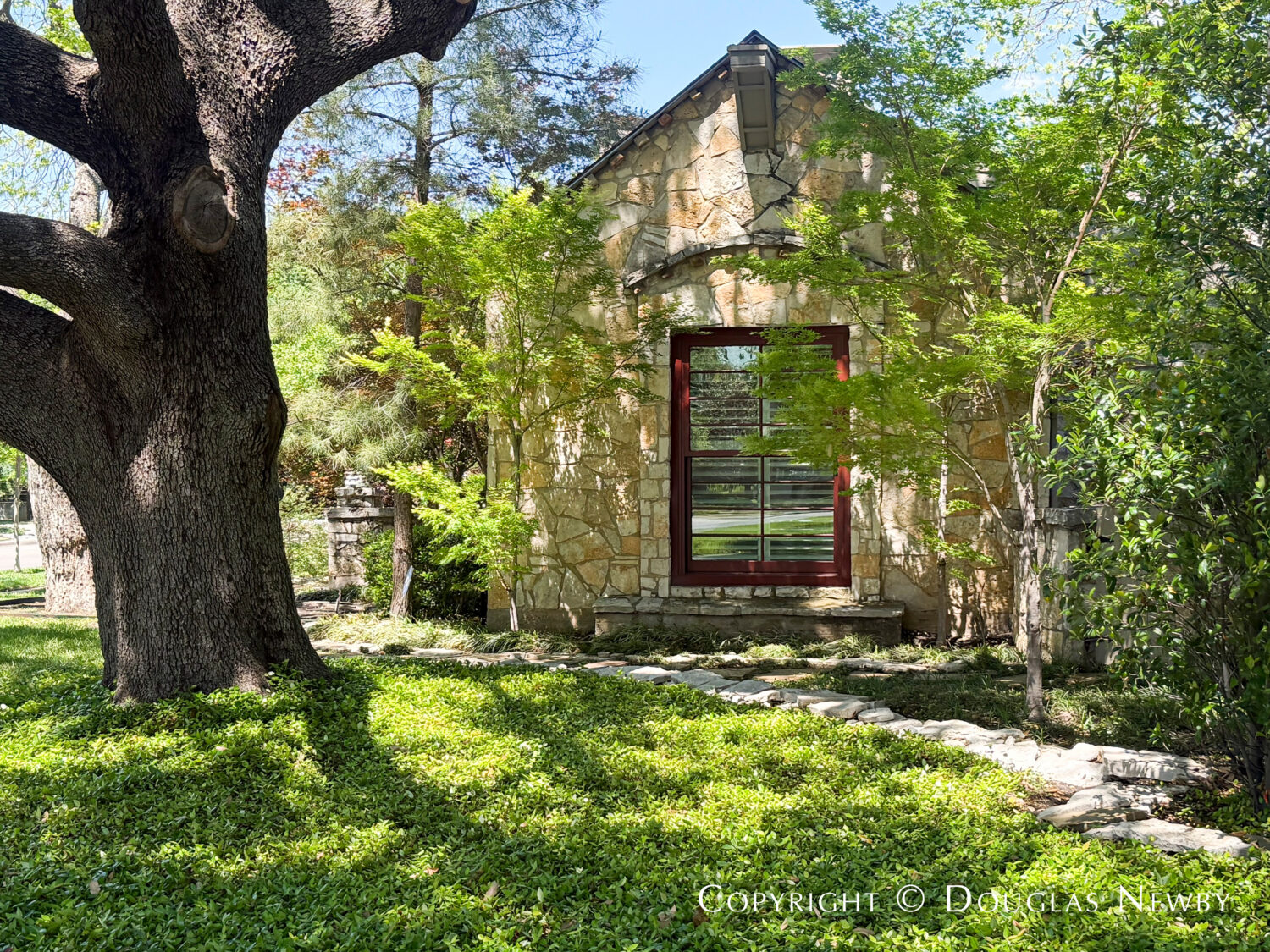
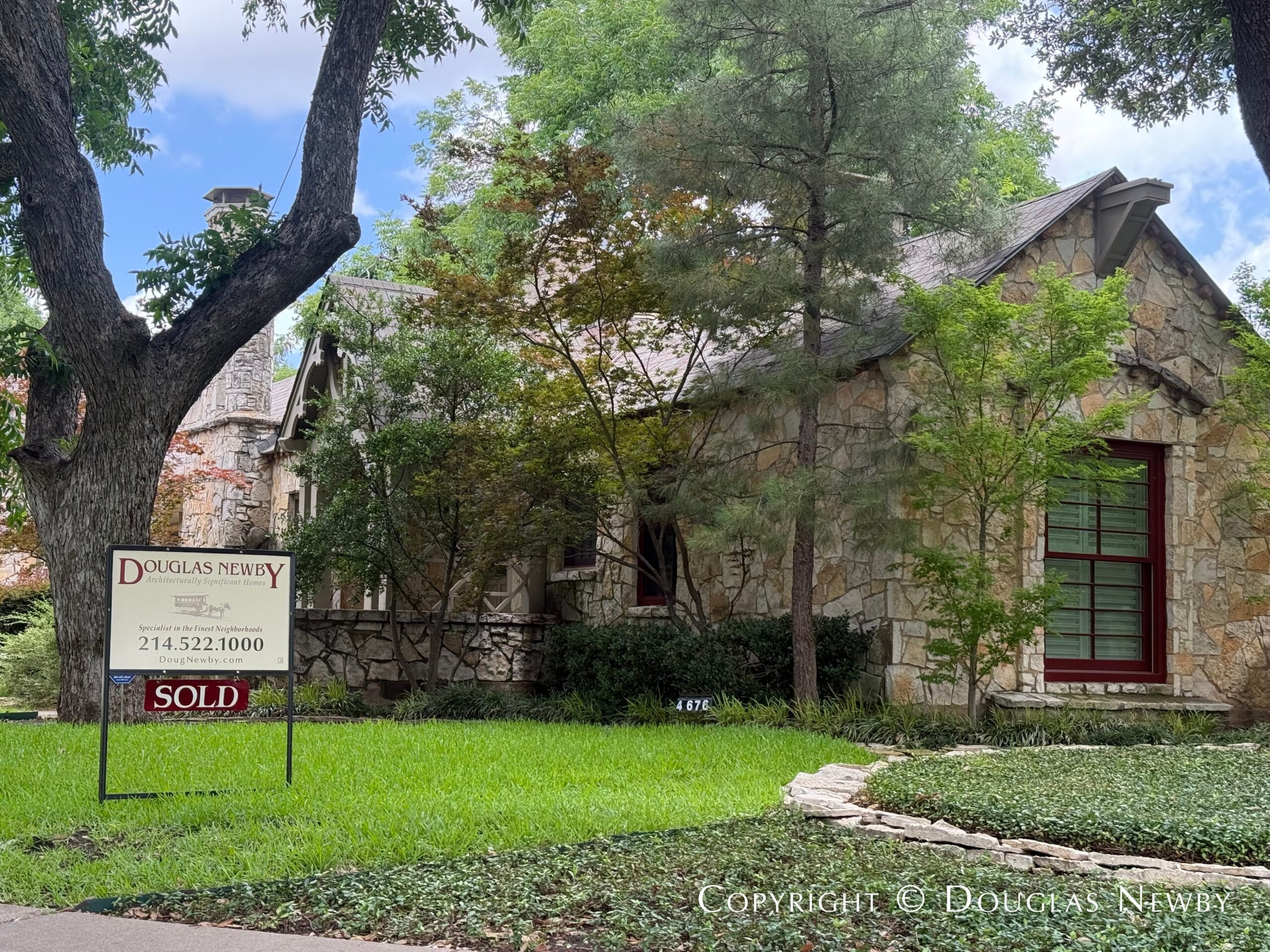
The Lorraine facade of this Charles Dilbeck-designed home is one of my favorite views of the house, as it is framed by a mature live oak tree.
For decades, I have watched architecturally significant homes be torn down not because no one wanted them, but because the buyers who would value them were never given enough time or information to understand the home and appreciate its value.
Why Historic Homes Are Torn Down
I have often written and said that the primary reason fabulous homes are torn down is not that no one wants them, but that real estate agents and owners are tempted by an offer that comes in before the home is on the market or in the first two days it is on the market. Both builders and preservationists have too often publicly said there is little hope for a historic home to be saved in Highland Park. Owners think they are getting a quick, sure sale, and agents do not have to do any work except provide the lot dimensions.
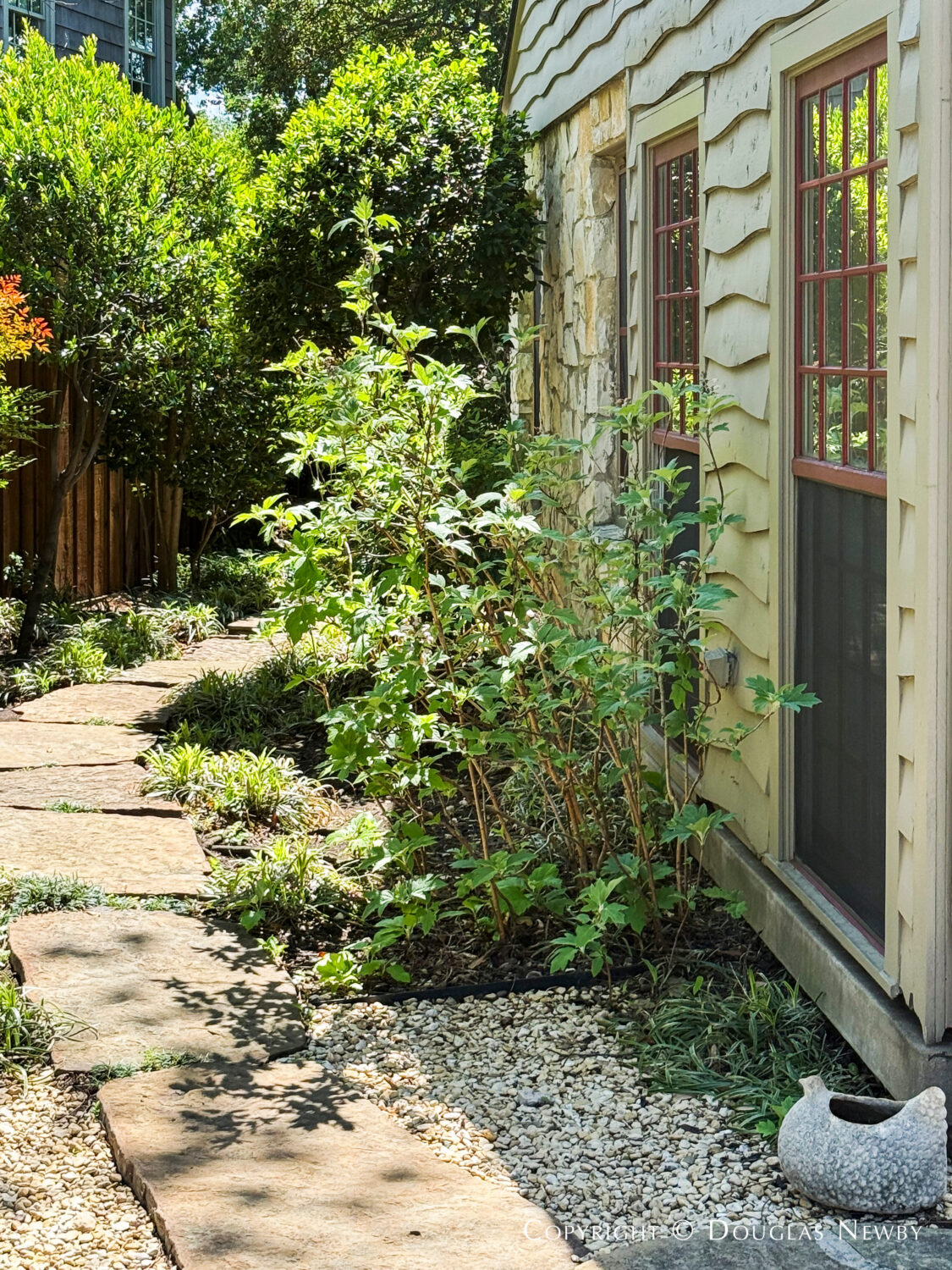
Charles Dilbeck-designed homes are often associated with stone paths traversing a series of small gardens, as seen at this West Highland Park home.
Buyers Will Pay for the House and the Lot
My contravening argument is that there are often numerous buyers who dream of owning a historic home. True, they need more time and information about the home to evaluate it, but they often are willing to pay more money for the lot and the house than a builder or an investor would pay just for the lot.
This Charles Dilbeck-Designed Home Proves the Point
This Charles Dilbeck-designed home is a perfect example.
I did receive a substantial offer from a builder the first day it was on the market. My clients turned it down.
Before it went on the market, we spent a month preparing the information, floor plans, and photographs on the house to give actual homebuyers the opportunity to understand the home and its value.
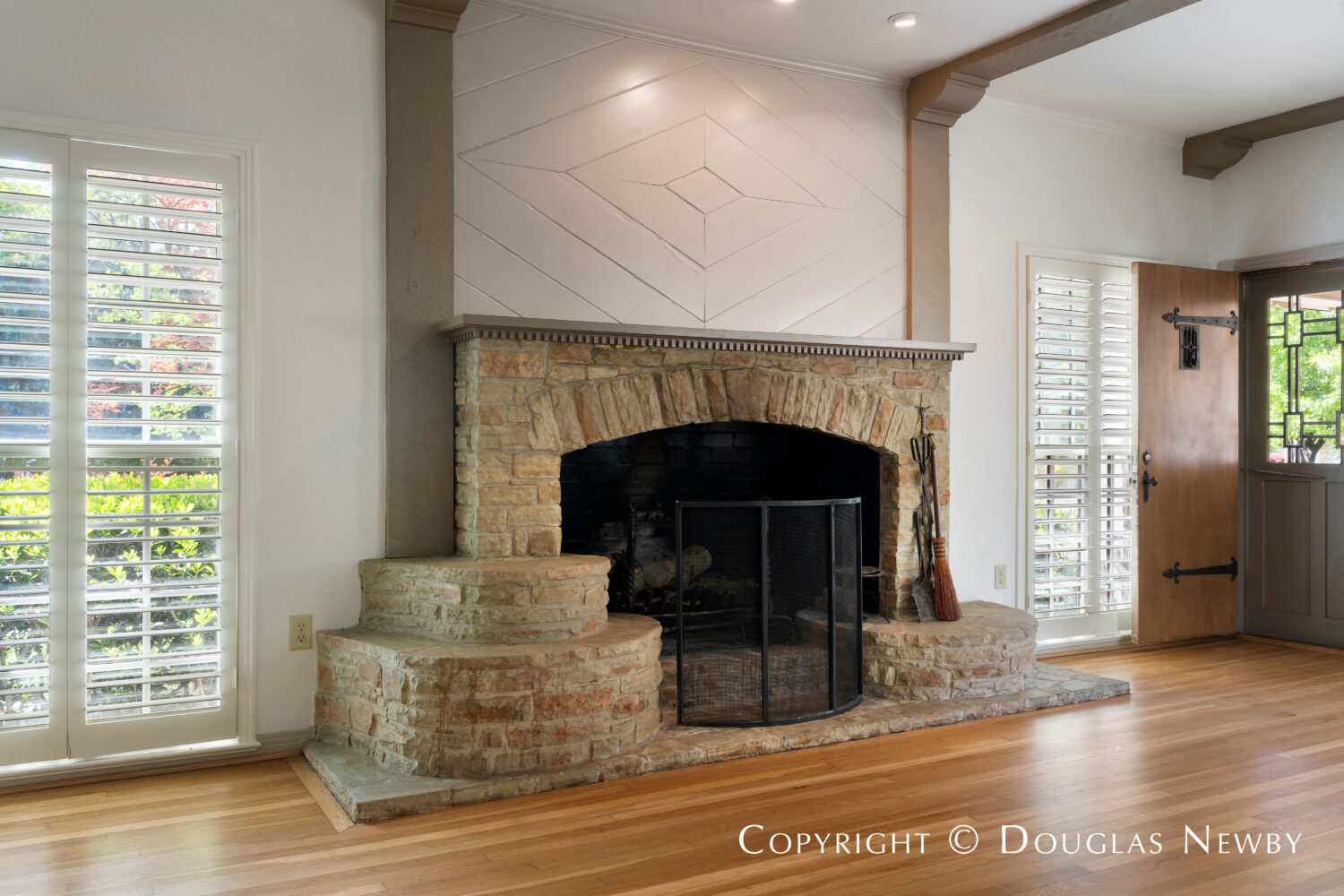
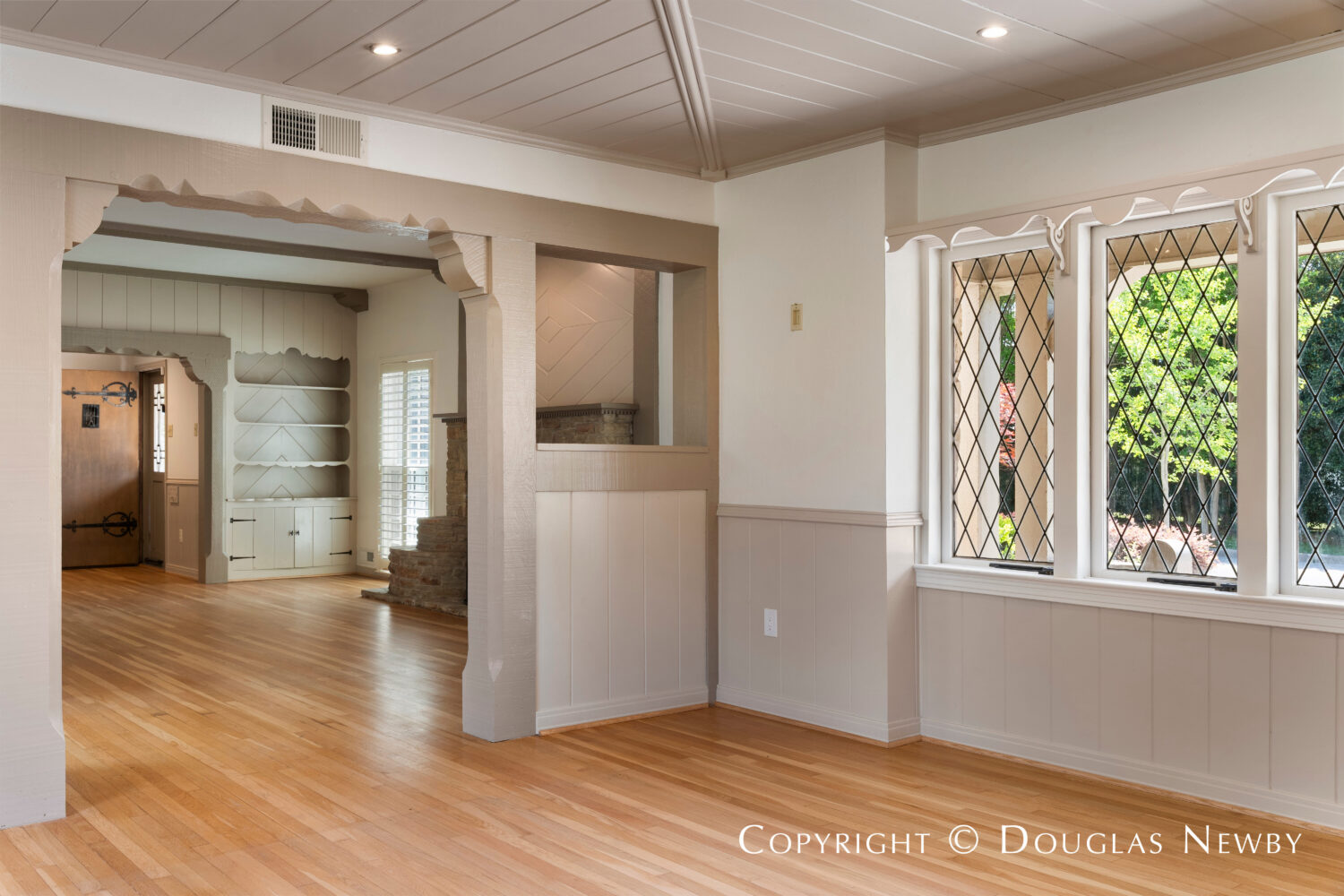
The fireplace, hearth and surrounding detail are reminiscent of a historic country estate more than a Highland Park cottage.
While there were 20 showings, it did take a month for the right offer to come in that was much higher than the builder’s lot purchase offer. These buyers, who are restoring and accentuating the original Dilbeck features, are cash buyers who closed in seven days. This made the closing date not that much different than if a spec builder had purchased the lot and closed in a customary 30- to 45-day closing.
Most encouraging was that there were three other buyers who were devastated that they deliberated too long and the house got away. Yes, there is a pool of buyers who desire a historic home in Highland Park.
Diamond pane leaded glass windows look out to the front of the home. A double passageway and open wall look through the formal living room to the front door. Continuous hardwood floors make this home look more expansive.
This sale demonstrates that preservation and the marketplace are not adversaries. When buyers are given sufficient information and sufficient time to evaluate an architecturally significant home, the marketplace often rewards both the seller and preservation. The seller may receive a higher price, the buyer acquires an extraordinary home, and an important piece of architectural history remains part of the neighborhood.
This 1945 Charles Dilbeck-designed home in Highland Park prevailed over a builder’s overtures for a lot sale and demolition and was purchased by new homeowners who are restoring and accentuating its original architectural features.