John Reoch Tribute: A Different Kind of Leadership
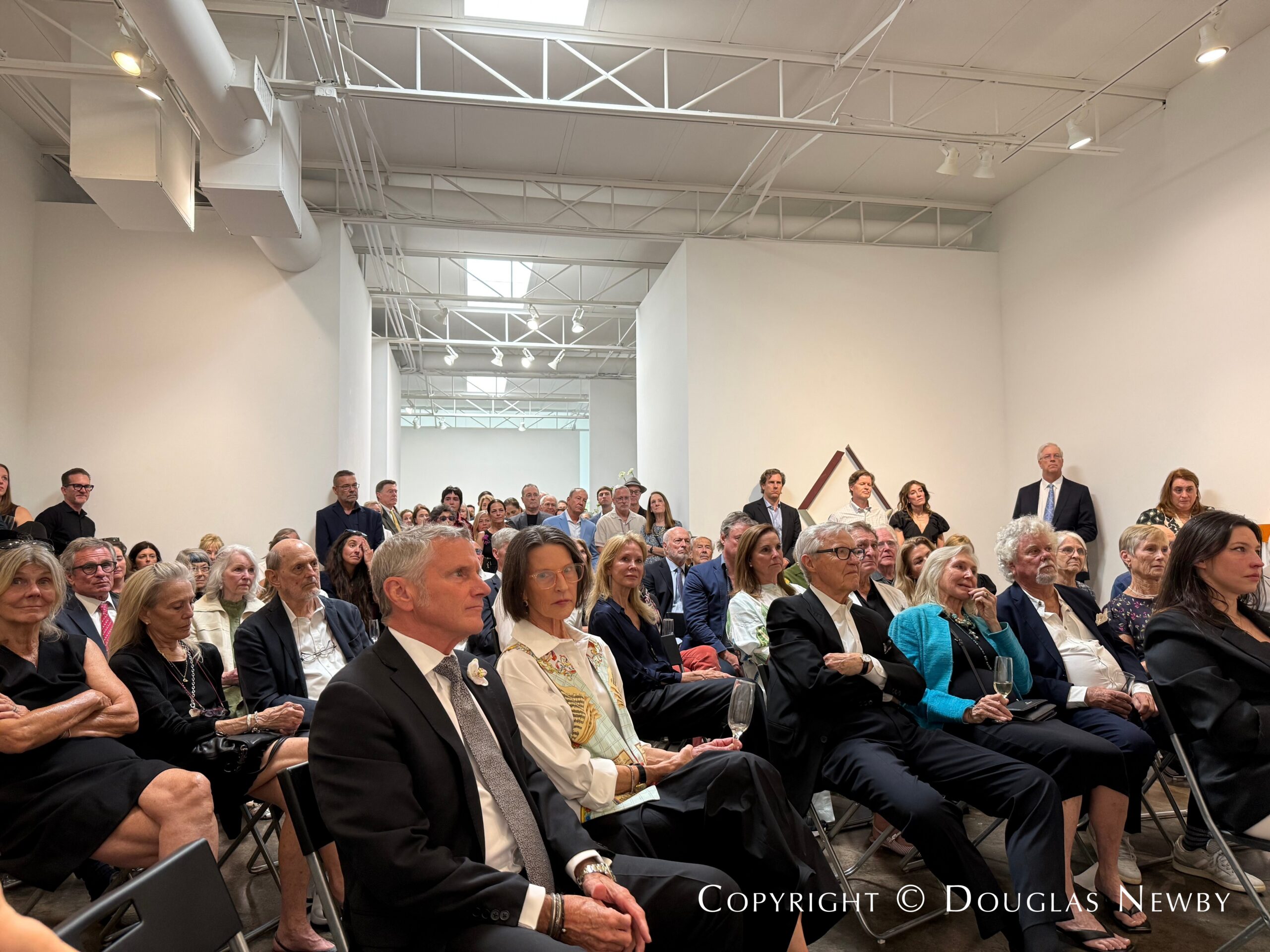
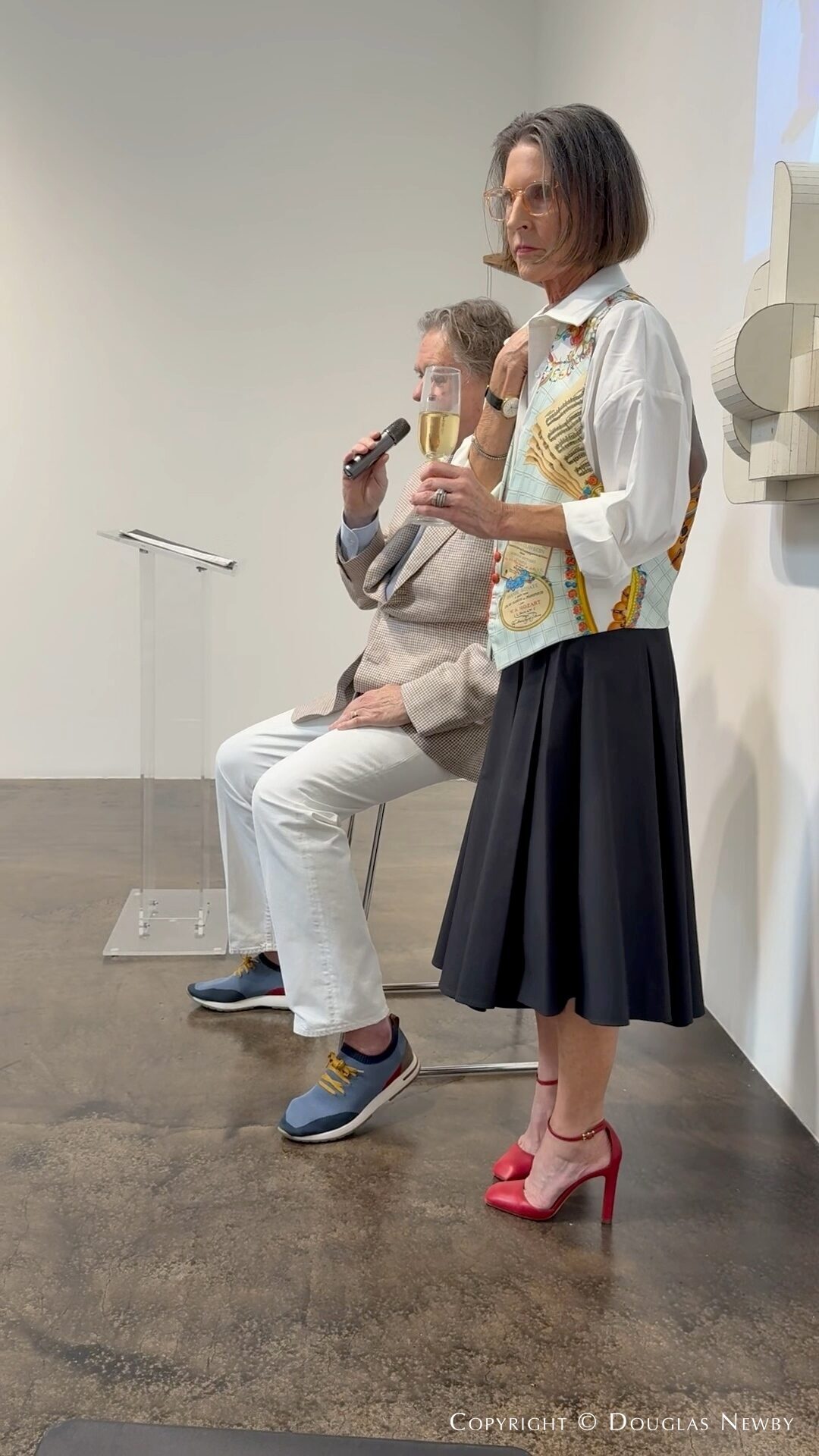
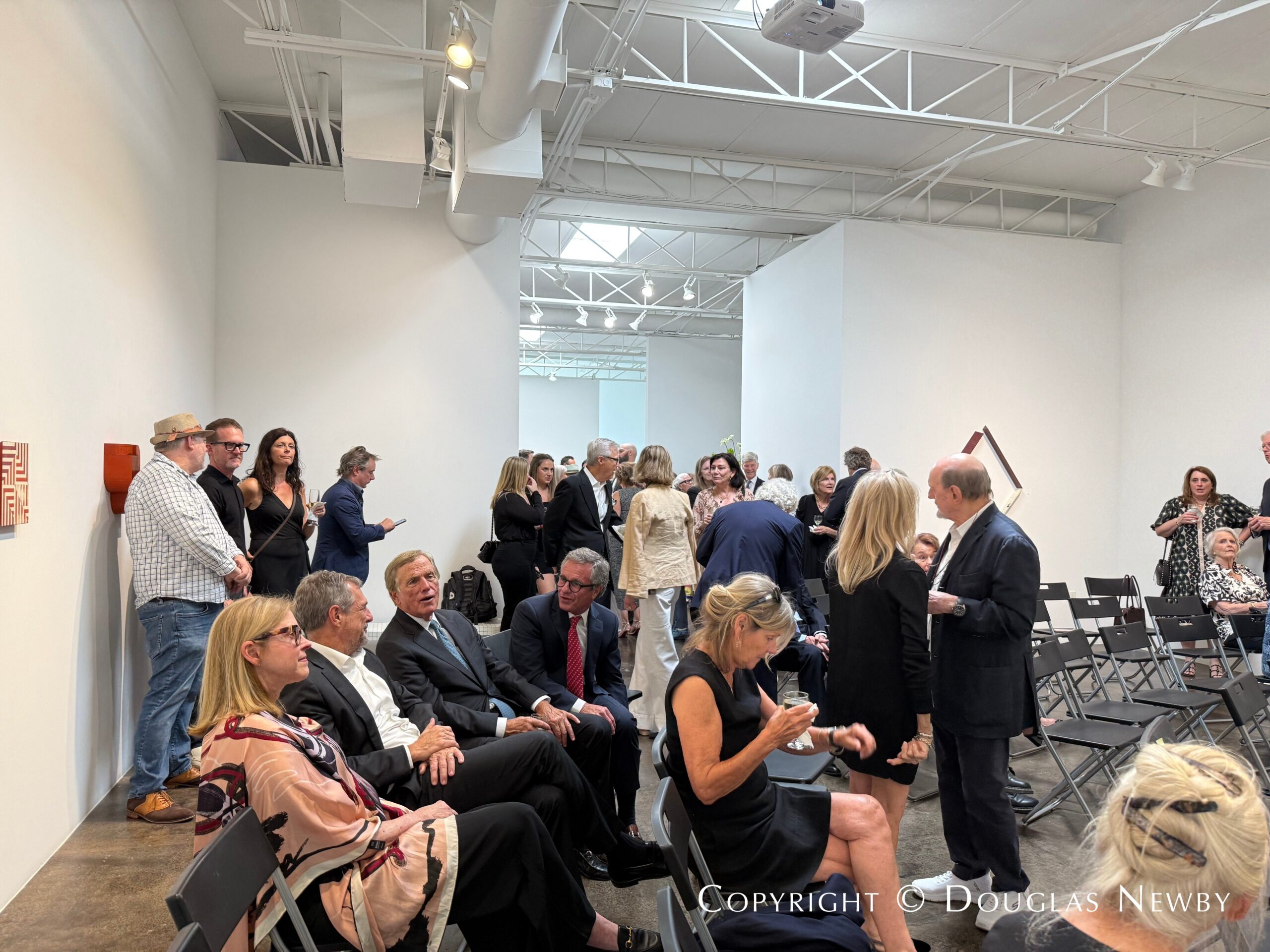
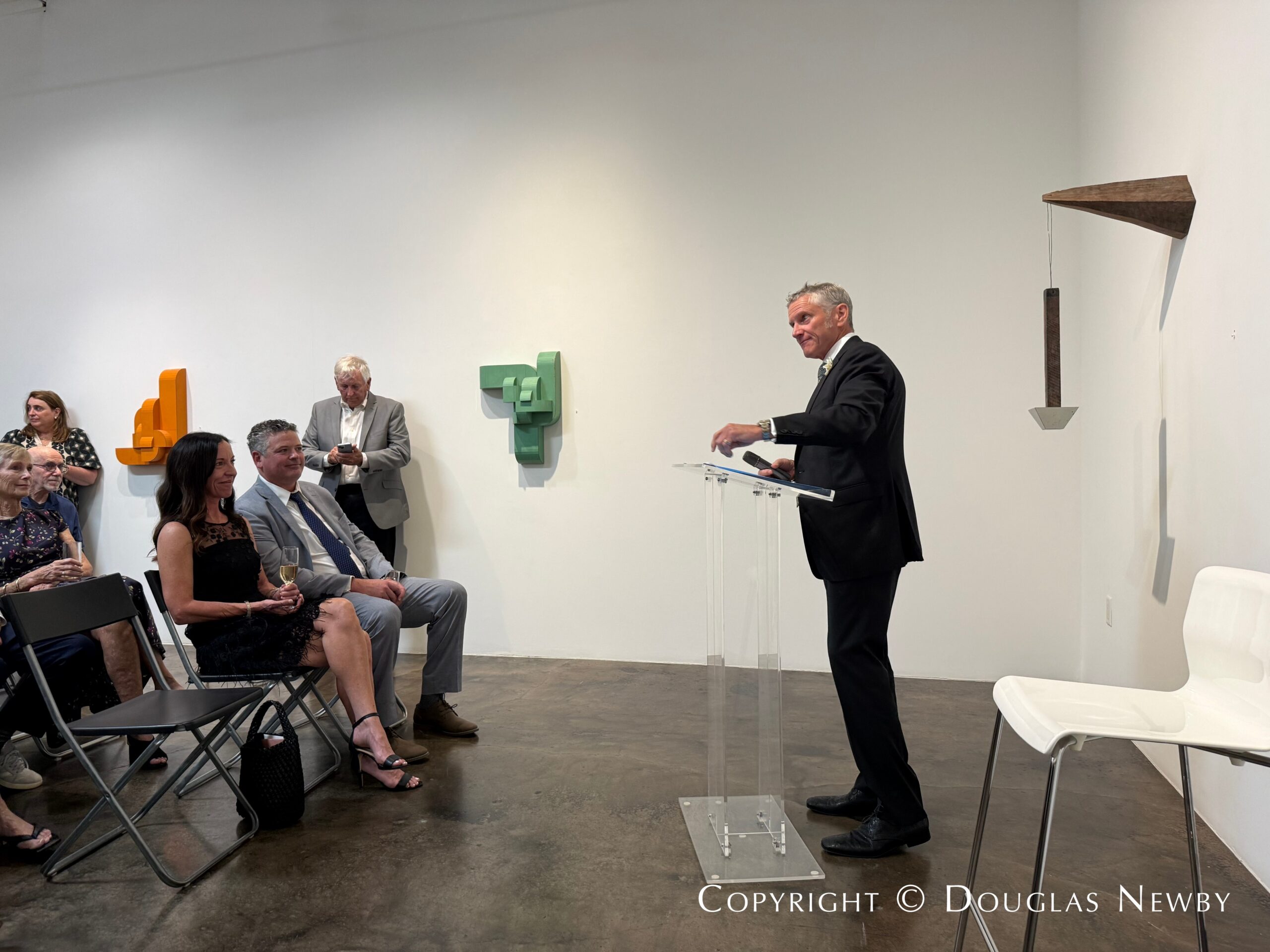
Behind seated audience, standing audience packs the Conduit Gallery to hear the four speakers giving a tribute to John Reoch. Douglas Newby led off with his remarks, followed by artist Frances Bagley, gallerist Cris Worley, and concluding with Mark Reoch.
Dallas leadership comes from many places—corporate chieftains, civic leaders, politicians, and philanthropists. John Reoch conveyed a different kind of leadership.
John was a brilliant lawyer, but his leadership did not come from holding office in a bar association or being a high-profile civic leader, philanthropist, or politician. He led through his relationships, friendships, mentoring, nurturing, presence, and style.
This sort of leadership dawned on me at his celebration of life reception at Nancy Whitenack’s Conduit Gallery on September 14, 2026. Here I saw Fortune 100 CEOs, gallery owners, artists, business owners, philanthropists, and political leaders in attendance. John Reoch was a leader in the sense that he influenced those who impacted the lives of others.
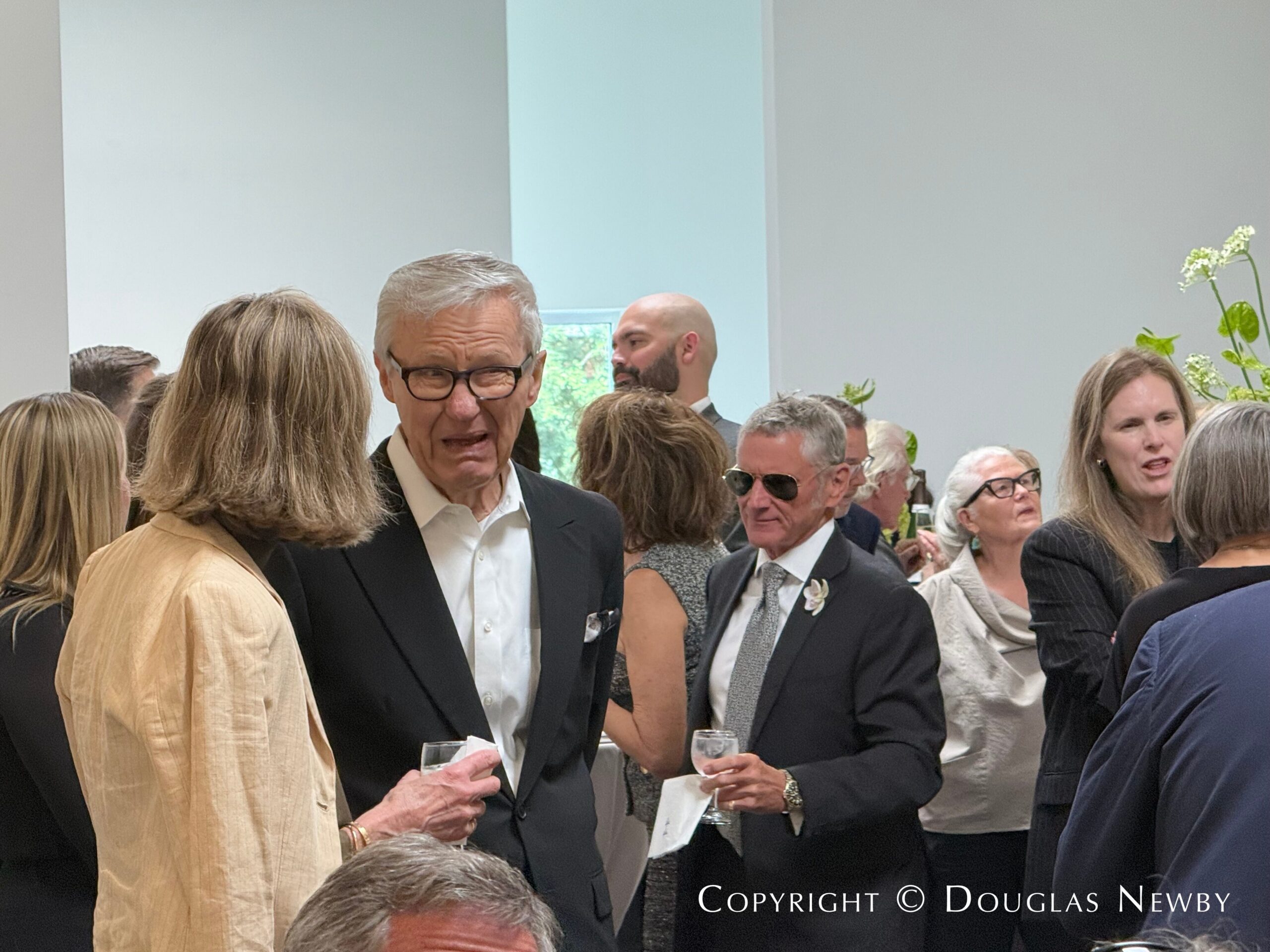
Before the John Reoch tribute remarks were delivered, those in attendance were saying hello to each other. In foreground is former CEO of Neiman Marcus, Barney’s and J.C.Penney, speaking to Connie Harkins. Mark Reoch is shown with the aviator sunglasses and orchid in his lapel in honor of his brother. Behind him is Frances Bagley, an artist who also delivered a tribute to John Reoch.
At a time when actual conversations and personal exchanges of ideas are dwindling, John Reoch brought vibrancy and gravitas to a room—and to someone’s life. Dallas is an open city, a great city made up of a mosaic of people who contribute. John helped make Dallas more interesting, stylish, and civilized through the way he lived and the people he touched.
Below is a transcript of the remarks I delivered in tribute to John.
A Tribute to John Reoch
Remarks by Douglas Newby Delivered at John Reoch’s Celebration of Life Conduit Gallery, Dallas · September 14, 2026
Karen Cowden, the wife of John Reoch, has just handed the mic to Douglas Newby, seated, who is doing a sound check before he stands at the lectern to deliver his tribute remarks at the Celebration of Life held at the Conduit Gallery on September 14, 2026.
John would be so pleased to see each and every one of you here today.
John did not need attention. He did not crave it. But he certainly basked in it—and in the affection of his friends.
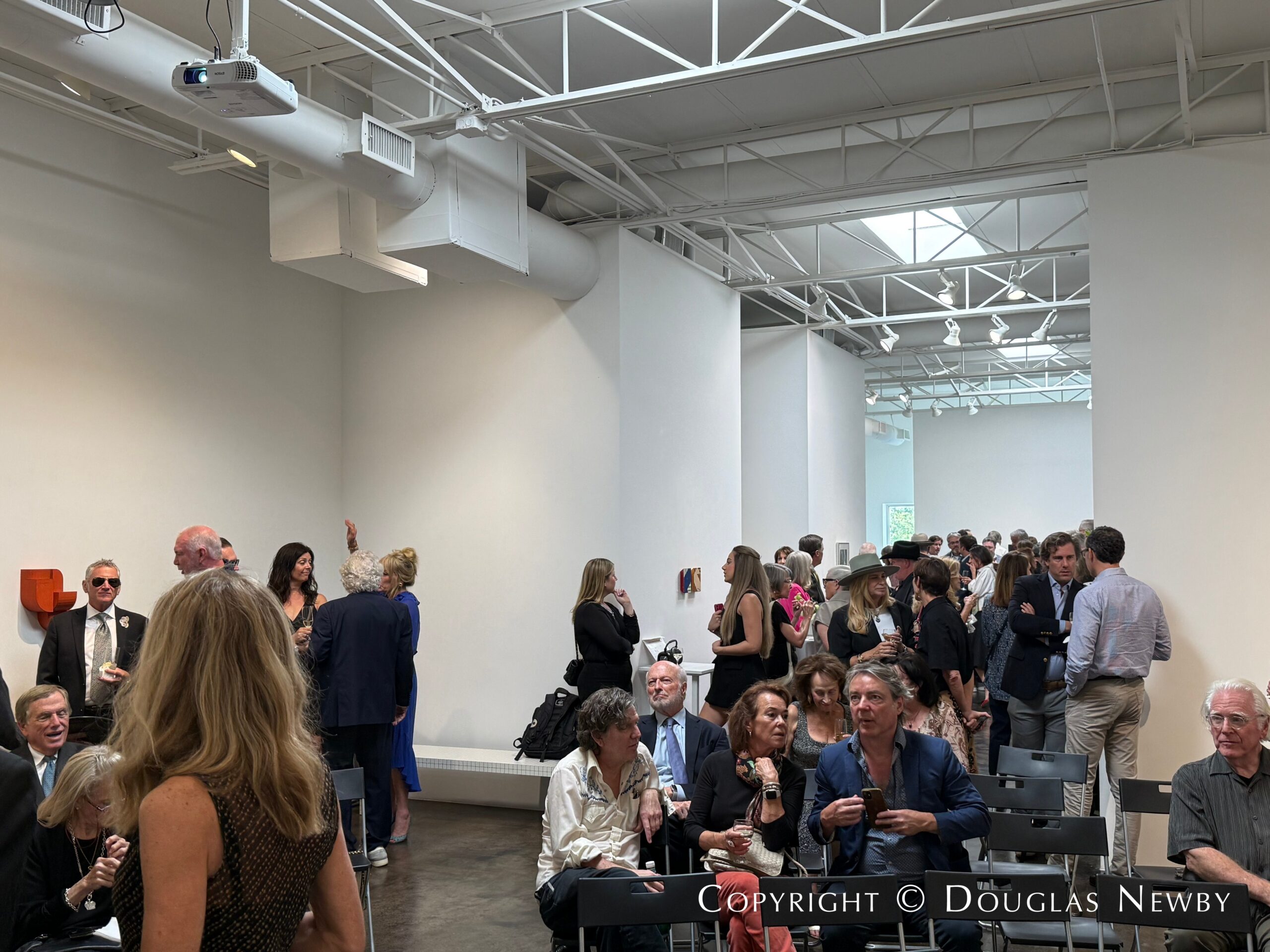
Audience begins to arrive, that includes interior designer Priscilla Sandlin and artist Richard Patterson, who also wrote a tribute to John Reoch for D Magazine, and Lael Brodsky, a great friend of John’s, who wore a hat in his honor.
John was discerning about his friends. He loved beautiful women, especially Karen, the love of his life. He admired well-dressed men. He was drawn to intellectuals, poets, brilliant minds, business minds, musicians, chefs, artists, athletes, eccentrics—and, looking around the room, perhaps even a scoundrel or two.
Could there be a cooler group than this one? Each of us was John’s friend—and John was the coolest of all.
Susie Bauer, philanthropist, restaurateur, artisan chocolatier, and nonprofit leader, is a great friend of John Reoch and his daughter Solange. She characteristically helped organize the reception and catering for this great event. Here she is seated, taking a pause, as people begin to arrive for the Celebration of Life tribute to John Reoch at the Conduit Gallery.
John was drawn to talent because he was a talent. Everything he wore, everywhere he went, and everything he did was intentional—and successful.
One does not become such a vast source of knowledge, or develop such a sense of humanity, without being a lifelong student.
John had a historical reference for everything. He also had the keenest eye for breaking trends. Perhaps that is why he was so daring in how he dressed. He could wear the latest trend and present it in a historical context. His aesthetic eye was so keen, it was almost as if he saw life as a series of perfectly composed vignettes.
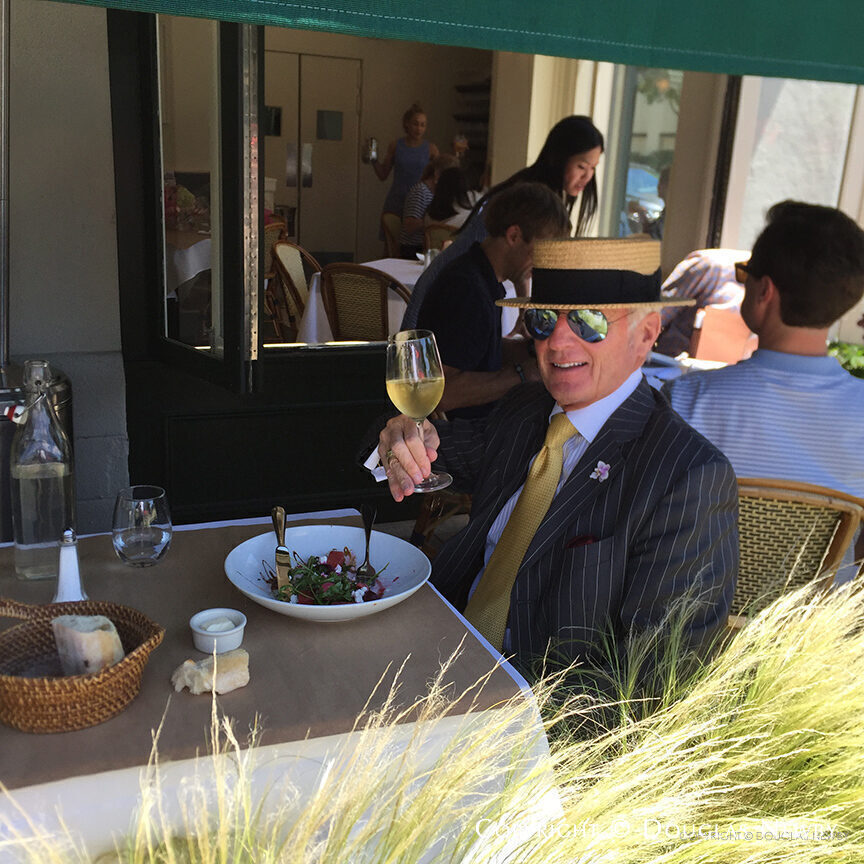
John Reoch, real estate attorney, is seen at the outdoor terrace of Le Bilboquet on Travis Street in Dallas.
I met John when he first came to Dallas, scouting for a home. He said he had been working for a button-down law firm in a button-down city. He sensed that Dallas was the perfect setting for his brilliance, curiosity, and style to flourish.
Just as he would spend his life discovering artists in Dallas, he quickly discovered a neighborhood.
Artists—before they became nationally recognized—had begun making a dent in the rubble and decay of Munger Place, which the city had identified as the worst neighborhood in Dallas. John bought the first new home built there in sixty years, two doors down from me, just after it became a historic district. It was where his daughter, Solange—his pride and joy—spent her formative years.
John put it simply: “I came from a 200-year-old home in Philadelphia. A 70-year-old house in Munger Place is virtually new. Why not buy new construction with the same aesthetic?”
He later sold the house to Adrian Hall, director of the Dallas Theater Center. Adrian had come from a 300-year-old house in Rhode Island – an elegant confirmation of John’s thesis.
Munger Place tax rolls have increased one hundred times since John made his purchase. That confirms his instinct for where taste—and Dallas—were headed.
John went on to live in three more then-underrecognized neighborhoods: Swiss Avenue, now one of Dallas’s most iconic; Northern Heights, now perhaps its hottest; and Greenway Parks, now its most popular and his Northern Heights home was developed by Steve Levine, who became a close, life long friend.
John was a trailblazer—always with dignity.
Some might think John changed when he came to Dallas. I think Dallas embraced John, and John changed Dallas. He helped make it a more interesting, stylish, and civilized city.
John came to Dallas being John. On my first training ride with him, soon after he arrived in Dallas, I found John changing the tape on his handlebars to match his cycling kit.
At his first Dallas law firm weekend retreat, John made three costume changes on the first day.
He was a brilliant lawyer who helped his clients make—and salvage—fortunes. Yet he might arrive at the annual cutthroat partnership meeting, where points were divided, wearing an Italian suit and riding a motorcycle.
You could count on John being victorious.
He also raised the firm’s cultural consciousness—perhaps through adverse possession.
Monumental Texas art spilled out of his office and into the conference rooms, reception areas, and hallways he claimed for art. He gave the law firm a cultural presence many never even knew it had.
After one professional cycling race, John told me he would use his prize money to take me to Dallas’s most iconic French restaurant for my birthday. At his suggestion, I had sweetbreads for the first time.
By the way, the prize money was not for winning the race.
It was the cash award for winning Best Dressed on a Bicycle.
At one of my last lunches with John, we were on the patio of a chef-owned restaurant. We had finished the appropriate sumptuous courses.
At that point, John might characteristically have ordered a vintage late-harvest dessert wine. Instead, I suggested off-menu root beer floats I had heard about.
John smiled and agreed.
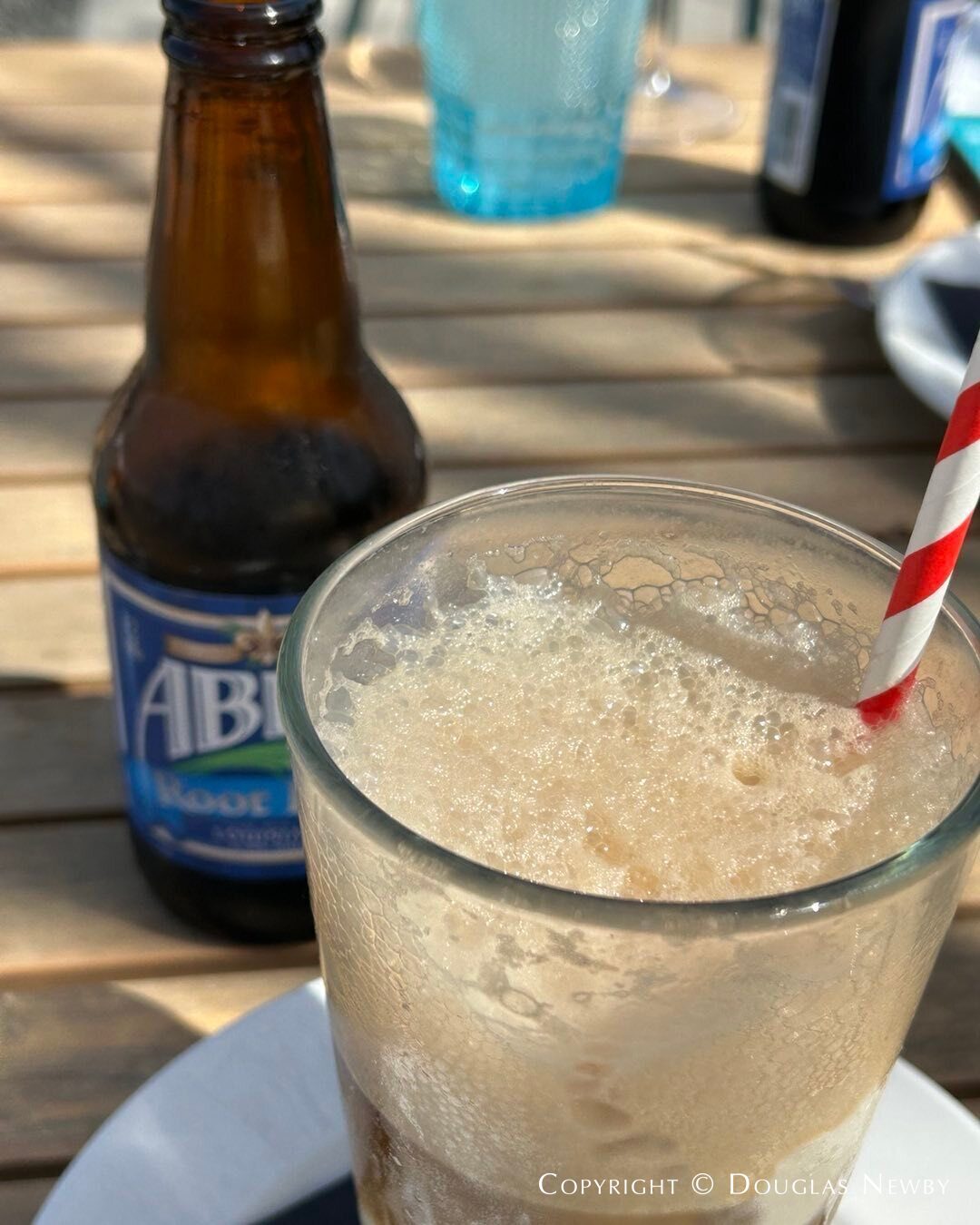
Root beer float on patio of chef-owned restaurant.
It was his first root beer float since grade school. But he approached it with his signature sophistication and grace.
John could make the simplest things in life seem exquisite.
Dallas has many heroes. But when they are gone, will any be as seared in our minds as John Reoch?
Will we ever again go to an opening, an event, or performance without expecting to see John Reoch commanding the room with nothing more than a riveting pose or nuanced gesture?
John came to Texas from Philadelphia. If he had stayed there, I am confident there would be a parchment filled with calligraphy recording his great accomplishments, carefully preserved in a historical archive.
But John came to Texas.
And here, it seems only fitting that someone write “The Ballad of John Reoch.”
A ballad that would carry forth the myth of John Reoch—a myth that began when he arrived in Dallas and continues today.
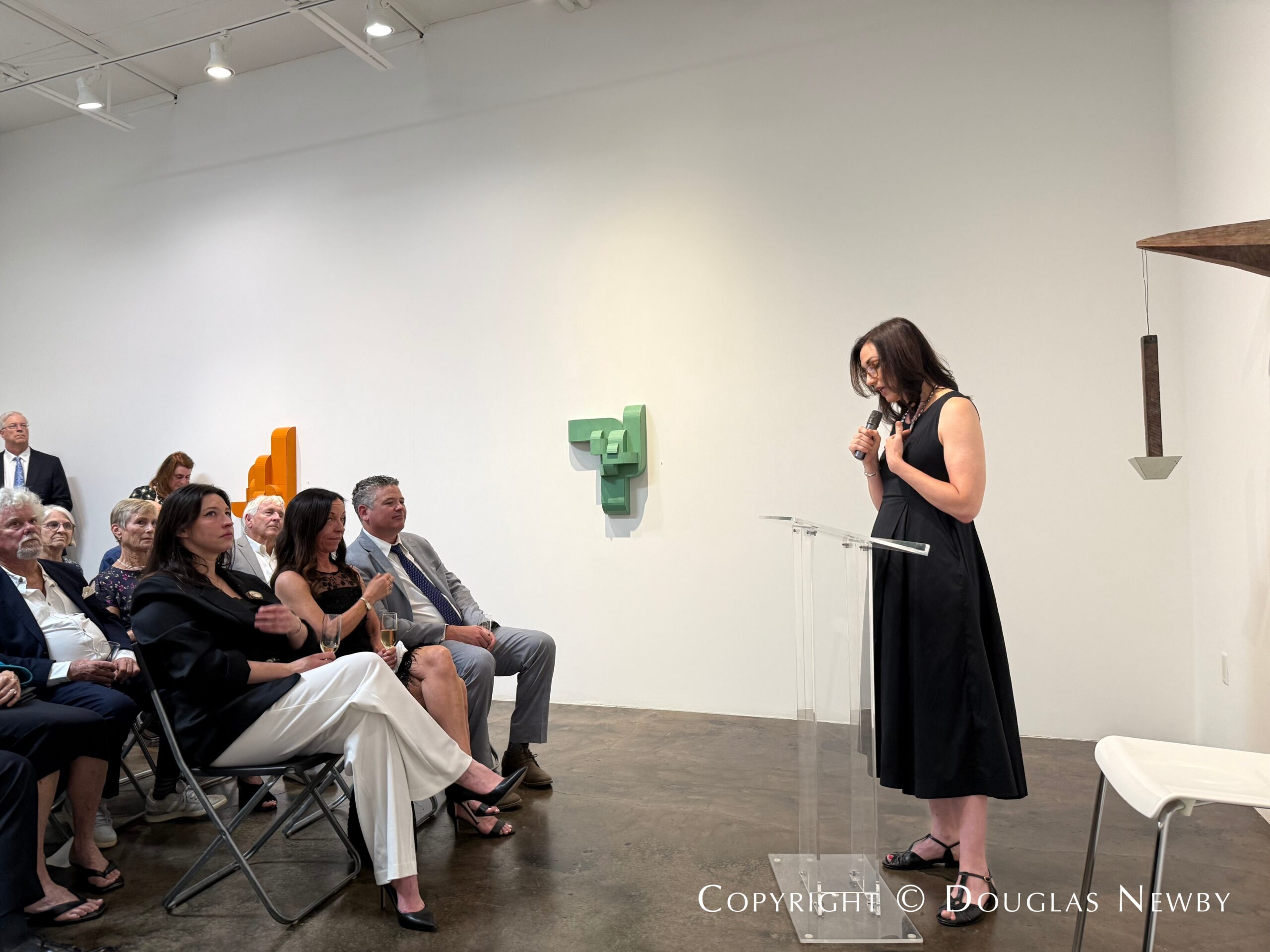
Cris Worley delivering remarks in honor of John Reoch. Front row includes Solange Reoch O’Donnell in center.
Mark Reoch, John Reoch’s brother, delivered closing remarks at John Reoch’s tribute at Conduit Gallery on September 14th at the Celebration of Life.