Dallas Historical Society Awards for Excellence 2026: Douglas Newby – Nominee
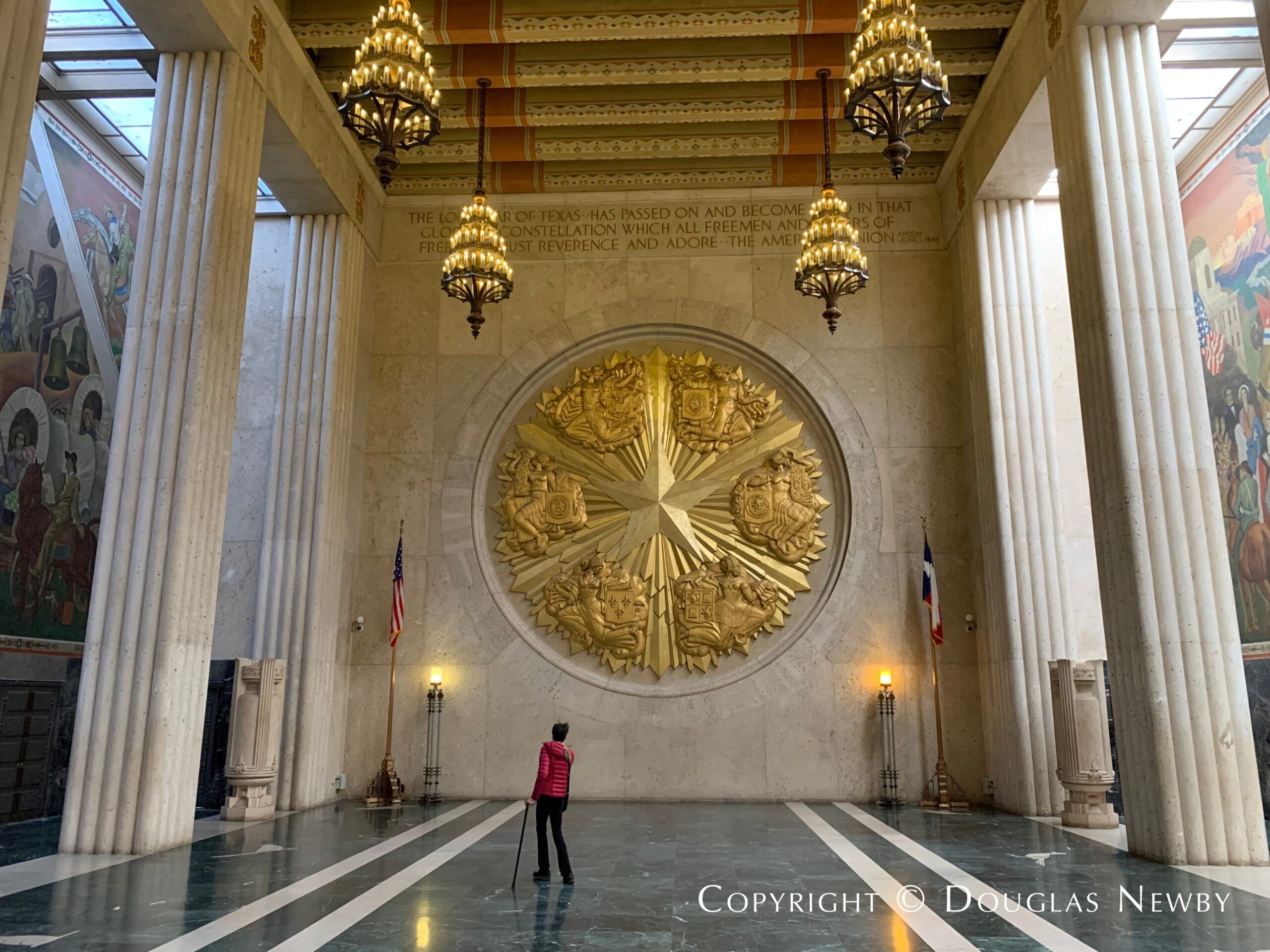
Oscar nominees and Pulitzer Prize nominees carry the distinction of being nominated throughout their lives. I will always cherish being nominated for the Dallas Historical Society 2026 Dallas History Makers Awards for Excellence in the Humanities/History category.
Lisa Hembry was my primary nominator, with supporting nominations from Lee Cullum, Gail Thomas, Darwin Payne, Eurico Francisco, Mary Peyton Burgher, and John Reoch. I consider these seven people among the greatest intellectual, cultural, and civic leaders of Dallas. Their work has shaped how Dallas is perceived, how it will be perceived, and the course of its future history.
Being nominated by this group is an honor in itself and inspires me to continue this work.
Lisa Hembry’s Nomination Is Inspiring
I was thrilled when Lisa Hembry said she was nominating me. With admiration, I have watched Lisa invigorate organizations, propel them forward, and represent Dallas as an elected official. Perhaps her greatest triumph was her leadership as CEO of the Dallas Historical Society during one of its most trying periods.
At the time, I was serving on the Society’s executive committee, having been nominated for that position by Rita Clements. This afforded me a close-up view of Lisa putting the Dallas Historical Society on a sound financial foundation, renewing its cultural relevance, and vastly expanding its awards program.
My appreciation of Lisa goes back further. I met her when she was serving as political affairs director of the Greater Dallas Association of Realtors. Among her initiatives was a Realtor Breakfast Caucus that brought Dallas leaders and elected officials together to speak. She invited me to chair the caucus during a year when speakers included Governor George W. Bush, shortly before he declared his candidacy for president, future Mayor Laura Miller, and an education panel that included Jim Caswell of SMU and John Goodman of the National Center for Policy Analysis.
After leading the Dallas Historical Society, Lisa was elected Dallas County Treasurer and later led other Dallas nonprofits. She also served as president of SMU’s Town and Gown Club. Lisa comes from a highly regarded Dallas family that set historical precedents. She has carried on this family tradition of Dallas accomplishments.
When Lisa told me she was nominating me, she explained that the process called for six supporting nominations and asked whether there were people I would like her to approach. I even surprised myself at how quickly six people came to mind—people whose understanding of Dallas history and contributions to the city I deeply admire.
Lee Cullum Represents the Best of Dallas
Lee Cullum comes from a generational Dallas family that includes prominent business leaders, church leaders, political leaders, educational leaders and civic leaders. Lee understands all these aspects of Dallas and is sought after for her opinions and insights on issues of Dallas past, present and future. It is no wonder Lee has moderated more panels than anyone else in Dallas.
Her knowledge and instincts about Dallas are intensified by her widely recognized expertise in international affairs, a subject on which she has also moderated panels in Dallas and around the country.
Many have been introduced to Lee through her commentary on National Public Radio and PBS NewsHour, her interviews on KERA’s series CEO, and her work as editor of D Magazine and editor of the Dallas Times Herald editorial page. However, few in Dallas—myself included—have escaped the brilliance of Lee and the enjoyment of hearing her speak or lead a discussion at public and private forums.
A photographic memory allows her to recite quotes to make a point or amuse the audience. Her passion and compassion for Dallas allow a discussion to flow freely, rich with information.
Lee Cullum, recognized around the world, is cherished for her understanding of Dallas. I will always cherish her supporting nomination of me for the Dallas Historical Society’s award for history and humanities.
Gail Thomas Co-Founded the Dallas Institute of Humanities and Culture
Dr. Gail Thomas helped Dallas think about the city in a deeper way. The Dallas Institute of Humanities and Culture explored Dallas historically, spiritually and culturally. A series of city conferences examined Dallas as an idea, a place and an aspiration. Great thinkers, authors, planners, architects, artists and professors provided an interdisciplinary understanding of Dallas the city.
Gail and the Institute fostered the reimagination of the Trinity River and the Great Trinity Forest. As founding president and CEO of the Trinity Trust Foundation, she helped raise design funds for the two Calatrava bridges spanning the Trinity River.
Usually I attended a lecture, a conference or a class, and occasionally I was on a panel, but I always left a Gail Thomas–driven event more enlightened and enthused about Dallas.
Gail Thomas’s ties to Dallas run deep. She was married to the late Robert Hyer “Bob” Thomas, a life trustee of the Dallas Historical Society with whom I sat on the executive committee. Bob was also the grandson of Robert Stewart Hyer, the founding president of SMU.
As a side note: after an elegant dinner in the Humphrey Lee ballroom at SMU, someone inquired if it was true that both Gail and I were past cheerleaders. Gail and I, in our last hurrah, spontaneously demonstrated a wraparound double stunt. Once an SMU cheerleader, always an SMU cheerleader!
It is easy to understand why I consider a supporting nomination from Gail Thomas for an award in history and humanities a holy Grail of nominations. No one has devoted a career more fully to Dallas than Gail Thomas.
Darwin Payne Is Dallas’s Foremost Historian
If one is going to be nominated for a Dallas Historical Society Awards for Excellence in the category of history, there is not a stronger nominator than Darwin Payne. He grew up in Dallas and covered the city as a journalist, reporting on the Kennedy assassination as a young reporter. He recorded history as it unfolded. Darwin has written definitive histories of Dallas, biographies, and accounts of Dallas events.
He encourages others to research and share our history. Connie Harkins, who works with me in real estate, took a history class from him when she was obtaining her MLA at SMU. For her major paper, she researched the history of the Crespi estate. With Darwin’s guidance, she uncovered fascinating material.
When the SMU Town and Gown Club celebrated its 75th anniversary, the club asked Darwin, one of its members, to speak about its history. He combed through the DeGolyer Library archives. His compelling talk revealed the eccentricities of earlier times—no women, no wine—and the importance of interaction between business leaders and SMU academics. That interaction remains a priority of the current SMU administration.
Whenever I have a question on our history, it is Darwin who I go to. In fact, I have more books authored by Darwin Payne in my library than by any other author.
Darwin has long been involved with the Dallas Historical Society as well as other history and preservation groups in Dallas. I should also mention he is kind and thoughtful. Darwin is a giant in his field and a giant in Dallas.
Eurico Francisco, AIA, Leads the Dallas Architectural Conversation
Eurico Francisco is originally from São Paulo, Brazil, where he earned his undergraduate degree before graduating from Harvard University’s Graduate School of Design. He brings an international architectural perspective to a city he is deeply passionate about. Unlike many nominators from multigenerational Dallas families, Eurico came to Dallas from elsewhere. Yet I do not think of him as an outsider. I think of him as a Dallas insider.
Dallas has been inspired, built and led, in large part, by people who came here from elsewhere. Texas Instruments co-founders Mayor J. Erik Jonsson and Eugene McDermott, for example, were both born in Brooklyn, New York.
When I first met Eurico more than 25 years ago, I was impressed by his knowledge of neighborhoods, place and design. Rather than simply searching for a home with exquisite design, he sought context, a phenomenal site and a home that related well to the city.
As his architectural practice flourished, so did his contributions to Dallas and its community. A former client of mine, CEO of one of the country’s largest architectural firms, described Eurico as one of the finest designers and urban planners he had worked with. His projects have earned awards and accolades, and they continue to inspire the architects around him.
In 2021, Eurico became president of the board of directors of the Dallas Architecture Forum. I have admired the Forum’s work since it was co-founded nearly 30 years ago by my friend and founding president Rick Brettell. Eurico has expanded the Forum’s offerings and attendance. What I admire most, however, is how he has deepened the public’s understanding of architecture and of the architects the Forum brings to Dallas from around the world.
When Eurico moderates panels and discussions, he listens and inquires more than he pronounces. He brings grace, dignity and intellect to conversations, cutting through architectural jargon and the appeal of pretty photographs. Whether I am listening to him from the audience or speaking with him privately, I always come away more enlightened and motivated.
Architecture is our physical roadmap of Dallas history. That is why I hoped Eurico Francisco would become a nominator. He has immersed himself in Dallas, contributed to its architectural character and led important conversations about how Dallas will look, feel and live into the future.
Mary Peyton Burgher Reviews, Preserves and Refines the Architectural Landscape
Dallas has a rich history with fashion, architecture and art. Mary Peyton Burgher is a multigenerational Dallasite and Texas Chapter Coordinator of the Institute of Classical Architecture & Art (ICAA).
Her leadership allows her to review a body of architectural work in Dallas spanning more than 125 years. She does this through panels, receptions and lectures. But beyond promoting the preservation of buildings and architectural character that deserve to endure, she brings together contractors, craftsmen, architects and interior designers to examine how to best preserve, accentuate or sympathetically adapt those buildings.
Mary Peyton also helps refine the city by promoting and bringing attention to the most elegant and successful projects, like Old Parkland, developed by Harlan Crow. I had the opportunity to moderate a panel with the architects who worked on the building, along with the designers and developer. Their discussion brought to light the aesthetic and economic success of Old Parkland, designed in the Jeffersonian style.
Other conversations I have moderated for ICAA have ranged from contractors discussing the preservation of Dallas’s historic homes to architects exploring the evolution of architectural styles in Dallas. Another panel discussed Sidewalks of Dallas and the future of preservation.
Mary Peyton works alongside the many strong preservation groups in Dallas, bringing attention to homes that we are losing and homes that are being saved. She brings her understanding of Dallas history and the setbacks and triumphs of its architectural evolution. Through the ICAA, she is helping guide Dallas to continue its aesthetically aware trajectory.
One cannot know Dallas without knowing why it is a beautiful city and what will keep it a beautiful city. I am grateful to Mary Peyton for allowing me to be part of that conversation and for her supporting nomination of me for the history and humanities category of the 2026 Dallas Historical Society awards.
John Reoch Dazzled Dallas—and Saw Its Future
John Reoch understood Dallas before Dallas understood itself. He was a brilliant real estate attorney who helped his Dallas clients make and salvage fortunes. He was an art collector with a keen and supportive eye for emerging artists, and John dazzled Dallas with his classic and edgy street fashion.
Only a handful of people in Dallas were courageous or analytical or aesthetically attuned enough to understand the future of the recently designated Munger Place Historic District when John bought its first newly built home in sixty years. That was John’s gift: he recognized what a place could become before most people recognized what it was.
I met John when he first arrived in Dallas. I had the opportunity to learn why he had chosen Dallas. I heard his analysis of Munger Place as a neighborhood and his take on a new home that had just been built in the historic district. Here I was thinking I would be his neighborhood Sherpa, and from the beginning he was explaining Dallas to me.
John was known for discovering artists, but few realized he also discovered historic neighborhoods. His eye took him from Munger Place to Swiss Avenue, from the St. Thomas district to what is now the Greenway Parks Conservation District. In each, he bought an architect-designed home, recognizing the appeal of neighborhoods that were then relatively unknown and that we now consider some of the best-known in Dallas.
His eye was not just for historic neighborhoods and homes. John also purchased the first architect-designed attached modern townhome in Northern Heights, developed by Steve Levine with now-famous but then little-known architect Lionel Morrison.
John was celebrated in many ways, but I always celebrated him for his understanding of Dallas. I suspect that understanding, as much as his elegant costumes, was part of the charismatic presence that endeared him to so many.
If I was going to be considered for a history and humanities award from the Dallas Historical Society in 2026, I very much wanted John Reoch to be a nominator. He discovered me when I was selling historic homes in a neglected neighborhood of dilapidated homes, on foot or on a bicycle. Over the years, John saw that passion for Dallas and its rich history and contemporary culture become the work I shared with others.
My favorite thing about being a real estate agent is when I have the opportunity to welcome people to Dallas and help them take root. Lifelong friendships often emerge, and before long these friends become part of the abundant garden of Dallas contributors. John was both a friend and a Dallas contributor.
Common Denominator of Nominators
The nominators understand that the history of Dallas is narrated by people, places, and architecture. Economic events, trends and the evolution of a city can be seen through the city’s pattern of development. As an example, I see Dallas neighborhoods like the rings of a tree—some years there is great expansion, and other years there is a drought of development. They recognize that this is how I see Dallas and its history.
While nonprofit leadership, political leadership, preservation leadership and the media are most often associated with promoting the history of Dallas, this group of nominators also saw value in a small business examining and promoting the history of Dallas and its future.
Most don’t think of small business initiating or extending a conversation about Dallas. I realized early in my career that I could contribute by serving on boards of nonprofits, but my greatest contribution to Dallas could be my residential real estate business. Through this work, I continue discovering and probing Dallas, raising the aesthetic consciousness and increasing the understanding of good neighborhoods and good architecture.
Specializing in architecturally significant homes, I have had the opportunity to represent Fortune 100 CEOs and general counsels, CEOs of the largest architectural firms, city managers, mayors, academic leaders, doctors, lawyers, architects, artists, teachers, journalists, CPAs, musicians and a Vietnamese housekeeper.
Representing this wide range of clients, professions, and neighborhoods has allowed me to sell the most expensive homes in Dallas and the least expensive homes in Dallas, giving me a more comprehensive view of Dallas history.
I find that what interests me about Dallas interests my clients, too. Over and over, I’ve seen how the history of Dallas helps illuminate the future of Dallas.
The research and understanding of Dallas I continue to develop for my clients also benefit the public at large. Through my websites, print media, letters, lectures, panels and daily conversations, I share this knowledge. My real estate work can be a resource for everyone who has an interest in our architecture, Dallas neighborhoods, Dallas city policy and the events and people that have shaped and will continue to shape Dallas.
The nominators have all made huge contributions to Dallas. In many ways, they have been the voice and conscience of how Dallas can best move forward.
I will be forever grateful that they took the time to recognize my work and support my nomination. Their understanding of Dallas makes that recognition especially meaningful to me.
Nominations of Douglas Newby for the 2026 Dallas Historical Society Awards for Excellence in Humanities/History
All seven nominations were incredibly generous and insightful. Each nominator brought a distinct voice and perspective on Dallas history, its evolution and how my work has contributed to our understanding of the city. I am including three below—from Lisa Hembry, Eurico Francisco and John Reoch—to convey that range.
Lisa Hembry’s Nomination of Douglas Newby
Douglas Newby’s sense of civic duty has guided a career devoted to revitalizing neighborhoods, preserving historic homes, and chronicling the architectural history of Dallas.
Doug has been a leading researcher of Dallas’s early citizens and contributors, the formulation and evolution of neighborhoods, and the aesthetic history of Dallas residential architects.
Doug is widely regarded as the foremost authority on Dallas history at the intersection of neighborhoods and architecture. He articulates the history of Dallas through the evolution of architecture and neighborhoods. He often explains that the history of neighborhood development is like the rings of a tree—some years the bands of development are wide during times of abundance, and sometimes the rings are narrow in years of economic drought. The architectural styles of homes distinctly mark the decades.
Knowing the prominent architects of each era reveals the hopes, dreams, and tastes of Dallas. Research into Munger Place revealed that this neighborhood, which was then identified as one of the worst in the city, was originally the finest neighborhood in Dallas. If the original concept of Munger Place could be restored, the neighborhood could be restored—which it was.
Doug worked with Lee McAllister and Virginia Talkington McAllister to create a revolving fund to purchase homes that had been converted to apartments in Munger Place and then sell them to homeowners with single-family preservation deed restrictions. Lee McAllister, the dean of SMU’s Dedman College, suggested that since there were no agents focused on this area, Doug obtain his real estate license. This allowed him to assemble the 21 required purchase options from absentee landlords—spread over two years—allowing Preservation Dallas to resell the homes to homeowners with preservation deed restrictions.
Doug has consistently advanced the practice of homeowners placing deed restrictions on historic homes they sell to prevent demolition in the future.
Doug also provided leadership in the revitalization of East Dallas. He served as zoning chairman of the East Dallas Design Committee and later as chair of the Property Owners for Single-Family Zoning. He initiated and coordinated the largest rezoning effort in Dallas history—100 blocks consisting of 2,000 properties that were rezoned from multifamily to single-family zoning, with Munger Place becoming a historic district. Junius Heights and Peak’s Suburban Addition, which comprised the remainder of the 100-block area, subsequently became historic districts. This single-family rezoning reversed the economic decline of the area, and over the following decades the area has experienced over $1 billion in renovation and appreciation.
In addition to initiating the revolving fund and the single-family rezoning, Doug established the first “Restoration House of the Year” award in the country. A selection committee each year—consisting of the Dallas Chapter presidents of the AIA and ASID, a magazine editor, a bank president, and a preservationist—selected the home that best defined restoration. Over the next seven years, the award was presented by three successive Dallas mayors at news conferences promoting neighborhood revitalization and the restoration of older homes. He also initiated the first two new replica houses on abandoned lots in Munger Place that he and neighbors built as a demonstration project.
To further increase interest and understanding of Munger Place, Doug reproduced the original photographs and text of the Munger Brothers’ 1905 Munger Place book. This book can be found in the reference library of the downtown Dallas Public Library. He also initiated, wrote, and helped produce The Guide to Older Neighborhoods of Dallas. This oversized book was the first book on Dallas neighborhoods, published before individual neighborhoods became widely recognized, and it rose to number two on the Dallas nonfiction bestseller list.
Doug has since written many Dallas Morning News op-eds on Dallas planning, architecture, preservation, and civic issues, and has had articles published in magazines such as D Magazine and Legacies, and in online academic journals including New Geography, an economic and urban policy journal.
Doug continues to be a thought leader in Dallas, having published over 100 essays on Dallas architecture, history, zoning, planning, and urban issues. He has been interviewed and cited by local, national, and international newspapers and magazines, and has been interviewed by local and national television stations, as well as on international broadcasts including CNN, discussing Dallas homes, neighborhoods, and the city.
Doug has also given many talks and moderated panels at organizations including the Dallas Historical Society, Salesmanship Club, The Women’s Club, the Junior League, the Institute of Classical Architecture & Art, the Architecture Forum, the MetroTex Breakfast Caucus, book clubs, and neighborhood associations.
Doug is one of the few Realtors ever selected for Leadership Dallas, and one of the few participants not representing a large nonprofit or major firm. Then–Dallas Historical Society president Rita Clements nominated him to serve on the executive committee of the Dallas Historical Society, where he continued to serve for five additional years.
Doug has served on the boards of Preservation Dallas, the Dallas Planning Council, and SMU Town & Gown (as president), and has been involved with numerous neighborhood associations and preservation initiatives. Doug received the Keystone Award from the Historic Preservation League for the rezoning and revitalization of Old East Dallas and an AIA Citation for initiating and chairing “50 Significant Homes,” the first architectural survey of the city, for the AIA’s 50th chapter anniversary, and the Hinsdale High School Hall of Fame award for preservation.
Doug currently serves on the Texas Preservation Trust Fund Professional Advisory Board and previously served as chair of the MetroTex Realtors Breakfast Caucus, where he featured speakers such as Governor George Bush shortly before he announced his candidacy for President.
Doug continues to develop the Architecturally Significant Homes website, which defines the specific boundaries and describes more than 270 Dallas neighborhoods. The site also includes research on 150 past architects and 250 current architects. This archive includes over 20,000 photographs of more than 2,000 Dallas homes. Many of these homes have been extensively researched, and many of the architects have been interviewed. Each architect is presented with examples of their work.
This website, developed and underwritten by Douglas Newby, has become a valuable research tool for historians, journalists, homeowners, and those interested in learning more about Dallas. When individuals around the world search for architecturally significant homes, Douglas Newby’s website appears first, featuring Dallas homes as examples.
Doug Newby’s work reflects a rare combination of civic leadership, historical scholarship, and lasting impact on the neighborhoods and architectural history of Dallas.
Eurico Francisco’s Supporting Nomination of Douglas Newby
Dallas Historical Society Awards for Excellence in Humanities/History
Nomination of Douglas Newby
I am pleased to offer this note in support of Doug Newby’s nomination for the Awards in Excellence in Humanities/History.
I’ve known Doug for over 25 years. Over this time, Dallas’ cityscape has changed dramatically, with a sustained influx of new residents arriving daily in Dallas and in other North Texas towns. While we welcome change, as change is inevitable, we also worry about erasing the very virtues that make a destination attractive in the first place.
Doug Newby has been a “Dallas scholar” for as long as I can remember, and he has continuously advocated for responsible growth that respects and honors the historical “roots” of our city. Certainly the most erudite and well-rounded real estate professional in the state, Doug promotes the appreciation of the history of our built environment from his unique perspective, educating the market on the qualities and attributes of each property and each neighborhood in our city. Doug has led innumerous efforts to preserve and/or enhance our city – from his prolific writing, to his advocacy in favor of policies that support preservation, to his speaking in different forums and to various audiences on the history of the neighborhoods in our city and their role in supporting healthy and sustainable growth.
Dallas is still a young city, vis-a-vis European cities or even other American cities of comparable size and population. Dallas is also on a definite growth path, as the de facto urban center of the North Texas region, which is slated to grow at a pace of roughly 20% over the next several years. What kind of city would we like to have as Dallas and North Texas grow and absorb new residents? What kind of place are we envisioning? What are we doing to study, to understand, to communicate, and ultimately to preserve the history of our brave and young city? These are the kind of questions that excite and move Doug Newby, who loves and understands the city that John Neely Bryan founded in 1841 and which, without passionate advocates like Doug, risks erasing its own footprints as it grapples with the powerful forces of growth. And, as we know, a place without history is a place out of place.
I strongly support Doug Newby’s nomination for the Award in Excellence for Humanities/History, as such recognition will acknowledge the value that we as a society put in the quality and the history of our built environment.
Eurico
Eurico R. Francisco AIA, NCARB, LEED AP
Design Principal, Principal
Dallas Architecture Forum, Board President
City of Dallas Urban Design Peer Review Panel, Chair
John Reoch’s Supporting Nomination of Douglas Newby
For the 2026 Dallas Historical Society Awards for Excellence in Humanities/History
Hello. My name is John Reoch. I have known William Douglas Newby for over 40 years. I first met him when he was selling homes in Munger Place. He was doing more than selling homes. He was curating, protecting, and overlooking a very special architectural neighborhood in Dallas. Part of what he was doing was somewhat unusual. He was participating in two brand new buildings in Munger Place, but unlike other buildings, and these residences were side by side, they were Prairie style. Unbelievable! Totally consistent with the neighborhood. Yeah! Prairie style in Munger Place. The Dallas Mayor was so excited about the new builds that he came out and cut the ribbons for their unveiling. Very cool.
Doug, being the historical preservationist that he is, expanded into Old Highland Park and the surrounding areas as a historical residential preservationist. He was very much concerned in educating the people following him. As in high school or college, he was our favorite teacher. He never spoke in a didactic way. He was always charming and graceful, explaining perhaps the significance of a cornice, showing the picture and how it fit into residential architecture. His teaching was amazing—gentle, joyous, informative. It helped us see again architecture, residential architecture. He provided us with a special perspective that perhaps we would never otherwise have. Doug, the educator, the historian, the gracious guy—Doug Newby.
John Reoch, 1943–2026
John Reoch was too weak from his stage four cancer treatments to write a supporting nomination, yet he left this nomination on Lisa Hembry’s voicemail so that it could be included with the nominations. Throughout his life and to the very end, John was making generous gifts and gestures to his family, his friends and emerging artists. His supporting nomination profoundly touched me.
Listen to John Reoch’s supporting nomination
2026 Dallas History Makers Awards for Excellence Luncheon
The Dallas Historical Society’s 2026 Dallas History Makers Awards for Excellence luncheon will be held Thursday, November 19, 2026, from 11:00 a.m. to 1:00 p.m. at Fairmont Dallas, 1717 North Akard Street, Dallas, Texas 75201.
The 2026 award categories include Arts Leadership, Creative Arts, Education, Health/Science Individual, Health/Science Organization, History, Humanities, Philanthropy, Volunteer Leadership and Jubilee History Maker.
Humanities/History Nomination Category
My nomination was submitted in the combined Humanities/History category of the Dallas Historical Society Awards for Excellence. The published description of this category recognizes individuals whose commitment to civic duty has helped accomplish community goals or whose research and writing have documented the history of Dallas and Texas. I appreciate that this category recognizes both those who help shape a city and those who help us understand its history.
Harryette Ehrhardt Received the 2025 Dallas Historical Society Award for Excellence in History
Harryette Ehrhardt is a friend, neighbor and client whom I first met when she and her family hosted the Swiss Avenue Home Tour wrap party on their front lawn. I later served as president of Advocates for Old East Dallas, an organization that supported her first run for DISD school trustee. Harryette was one of the original founders of the Historic Preservation League.
The Dallas Historical Society honored her for “the preservation of historic structures and those whose stories helped build them.”
ChildCareGroup Dallas Is the 2026 Recipient of the Dallas Historical Society Award for Excellence in History
The Dallas Historical Society Awards for Excellence is honoring ChildCareGroup Dallas for “strengthening families, supporting neighborhoods, and helping to build a more resilient Dallas through early childhood education and family support.”